
Universal Coaching Alliance
Thought Leadership Hub
Professional Insight. Applied Practice. Sector Influence.
This hub explores the most pressing themes shaping coaching today — across business, leadership, supervision, education and emerging technologies.
Each theme includes a flagship article and curated further learning for coaches committed to professional depth.
At UCA, we believe that great coaching integrates rigorous evidence with ethical standards, reflective supervision, and real-world practice. As the profession continues to evolve, maintaining an informed and responsible evidence base is essential to credibility, public trust, and sustainable impact.
Coaching in Education:
From Instruction to Empowerment

Education systems are under increasing pressure to cultivate not only knowledge but resilience, critical thinking and learner autonomy.
Coaching offers a shift in educational practice — from information delivery to facilitation of learner agency. When coaching concepts are applied in educational settings, learners and educators alike benefit from increased self-awareness, reflective thinking and intentional growth.
Research by Dr Laura Rees-Davies and colleagues contributes to our understanding of how professional identity, reflective practice and the development of coaching psychology intersect with educational and applied learning contexts. These themes are closely connected with psychological safety and transformational learning environments that support sustained development.
Embedding coaching skills into education supports students in becoming more self-regulated, adaptable learners. At the same time, educators who adopt coaching practices report greater clarity in communication, increased professional confidence and enhanced reflective capacity.
Coaching in education is not an add-on programme. It is a mindset shift that reframes how learners and educators engage with uncertainty, challenge and developmental purpose.
UCA promotes structured, ethically grounded approaches to embedding coaching within schools, universities and leadership environments, ensuring alignment with professional standards, ethical conduct and reflective supervision.
Curated Professional Perspective
Selected by UCA to broaden sector awareness
Educational Perspective | Video
Do Schools Kill Creativity? – TED (Sir Ken Robinson)
Applied Coaching Guide | Teaching & Learning
Coaching for Teaching and Learning – UK Government PDF. A freely accessible practical guide offering tools and insights on applying coaching concepts in educational settings.
Laura Rees-Davies – Cardiff Metropolitan University
Research exploring professional identity formation, reflective practice and the development of coaching psychology within educational and applied settings — themes closely connected to psychological safety and transformational learning environments.
Professional Reflection
Integrate this insight into your coaching practice.
Where in your educational environment could coaching skills most enhance learner agency and reflective thinking?
How do you currently support psychological safety — and how might coaching frameworks strengthen it?
In what ways could nudging learner autonomy shift classroom culture away from performance-based instruction toward developmental engagement?
What professional development structures are needed to embed coaching practices ethically and sustainably within your organisation?
You may log this reflection towards your continuing personal and professional development hours.
Artificial Intelligence in Coaching:
Tool, Threat or Transformational Partner?

Artificial intelligence is reshaping professional practice across sectors — and coaching is no exception.
Used responsibly, AI can enhance preparation, streamline administration and support reflective insight. Used carelessly, it risks diluting relational depth and ethical clarity. The distinction lies not in the technology itself, but in professional judgement.
AI should augment — not replace — human presence. It can support structured reflection, highlight patterns and strengthen client accountability, but it cannot substitute relational attunement, ethical discernment or lived experience.
As expectations around data transparency and measurable impact increase, coaches must develop digital literacy alongside ethical governance.
The future of coaching will belong to practitioners who integrate technology intelligently while safeguarding trust, confidentiality and professional standards.
UCA advocates ethical AI integration grounded in accountability, transparency and supervision.
Curated Professional Perspective
Selected by UCA to broaden sector awareness
Global Perspective | Video
How AI Can Save Our Humanity – TED (Kai-Fu Lee)
Industry Insight | Publications
Digital Ethics Collection – McKinsey & Company
Academic Authority | Research Institute
Human-Centred AI Institute – Stanford University
Professional Reflection
Integrate this insight into your coaching practice.
In your context, where are individuals performing well but not yet at their potential?
What questions can you use to shift thinking from problem-solving to possibility framing?
How do you balance support and challenge to help coachees take ownership of next steps?
What metrics or indicators will show that coaching is moving performance beyond good to great?
You may log this reflection towards your continuing personal and professional development hours.
Insights from Civil Service Practice:
Coaching from Good to Great

Recent Civil Service coaching initiatives reinforce a powerful professional insight: coaching is not a corrective intervention — it is a catalyst for elevating capable professionals from solid performance to exceptional contribution.
The public sector example highlights how structured coaching enables individuals to think more clearly, challenge limiting assumptions and translate reflection into purposeful action. Rather than focusing on deficit, coaching strengthens agency, confidence and strategic clarity.
For UCA, this case reflects a wider principle. Coaching, when embedded professionally and ethically, becomes a performance accelerator — fostering autonomy, accountability and continuous improvement across individuals and organisations.
The downloadable article below presents UCA’s flagship perspective on this shift — setting out a structured, professional framework for moving from “good” to “great” in a way that strengthens standards, impact and long-term credibility.
Curated Professional Perspective
Selected by UCA to broaden sector awareness
Public Sector Insight | Case Study
‘Coaching is about helping you go from good to great’ – GOV.UK Case Study
Educational Coaching Reference | Guide
Coaching for Teaching and Learning – Practical Guide (UK Government)
Academic Evidence | Coaching Impact Research
The Effectiveness of Workplace Coaching: A Meta-Analysis – Aston University
Open-access meta-analysis of coaching impacts on organisational and learning outcomes.
Professional Reflection
Integrate this insight into your coaching practice.
In your context, where are individuals performing well but not yet at their potential?
What questions can you use to shift thinking from problem-solving to possibility framing?
How do you balance support and challenge to help coachees take ownership of next steps?
What metrics or indicators will show that coaching is moving performance beyond good to great?
You may log this reflection towards your continuing personal and professional development hours.
Supervision Is Not Remedial:
It Is Professional Power

As coaching continues to professionalise, supervision becomes essential.
It is not corrective oversight, but disciplined reflective practice. Supervision strengthens ethical judgement, deepens relational awareness and builds professional resilience. Within it, coaches examine bias, navigate ethical complexity, manage emotional load and explore power dynamics.
Structured reflection enhances decision-making, safeguards client wellbeing and supports sustainable practice. It moves supervision from reassurance to accountability.
Professional maturity is defined not by tenure, but by the willingness to examine one’s impact.
Embedding supervision within coaching culture signals commitment to standards, quality and long-term credibility — principles central to UCA’s professional framework.
Curated Professional Perspective
Selected by UCA to broaden sector awareness
Professional Insight | Video
The Power of Vulnerability – TED (Brené Brown)
Professional Standards | Framework
Code of Professional Conduct and Ethics – UCA
Practice Development | Supervision Research
Lewis, J.J. (2024). Conceptualising how coaching supervisors meet their supervisees’ needs. International Journal of Evidence Based Coaching and Mentoring.
Professional Reflection
Integrate this insight into your coaching practice.
- Where might unconscious bias influence your coaching conversations?
- When did you last explore a challenging client dynamic in supervision?
- How do you monitor emotional load and professional boundaries?
- What evidence demonstrates your commitment to reflective practice?
You may log this reflection towards your continuing personal and professional development hours.
Evidence-Informed Coaching:
Raising Professional Standards

As coaching grows, credibility depends on rigour.
Evidence-informed practice integrates behavioural science, structured reflection and measurable evaluation into coaching delivery. This does not reduce coaching to data; it strengthens trust through clarity and accountability.
Research across psychology and adult development highlights that sustainable change requires identity-level engagement, intrinsic motivation and relational safety.
Professional coaching therefore demands frameworks that support goal clarity, behavioural reinforcement and reflective review.
Accreditation and supervision ensure that practice remains aligned to ethical and research-informed standards.
For UCA, professionalisation is not bureaucracy. It is the foundation of trust, impact and long-term sector integrity.
Curated Professional Perspective
Selected by UCA to broaden sector awareness
Psychological Research | Video
Grit: The Power of Passion and Perseverance – TED (Angela Duckworth)
Research Authority | Professional Psychology
British Psychological Society – Research & Publications
Practice Development | Evidence Integration
Applied Coaching Research Journal – UK Coaching
Professional Reflection
Integrate this insight into your educational context.
- What frameworks underpin your coaching methodology?
- How do you measure progress without reducing human complexity?
- Where might your practice rely on trend rather than evidence?
- How does accreditation strengthen your credibility?
You may log this reflection towards your continuing personal and professional development hours.
Systemic and Organisational Coaching:
Coaching Beyond the Individual

Coaching is often framed as an individual developmental intervention. Yet organisations increasingly expect it to influence systems — shaping leadership behaviour, communication patterns and cultural norms.
Systemic coaching moves beyond one-to-one transformation. It considers context, power dynamics, stakeholder relationships and the organisational environment in which decisions are made. Rather than asking only “What does this individual need?”, it also asks, “What is the system reinforcing?”
When embedded strategically, coaching strengthens leadership alignment, psychological safety and collective accountability. It supports cultural clarity and encourages reflective dialogue across teams.
Organisations that integrate coaching systemically report stronger collaboration, clearer decision-making and improved resilience in periods of change.
Coaching becomes most powerful not when it changes a person in isolation, but when it influences the relational networks around them.
UCA promotes structured, ethically governed approaches to systemic coaching that connect individual growth with organisational impact.
Curated Professional Perspective
Selected by UCA to broaden sector awareness
Global Perspective | Video
How Great Leaders Inspire Action – TED (Simon Sinek)
Research Authority | Organisational Behaviour
Harvard Business Review – Organisational Culture & Leadership Insights
Academic Reference | Systems Thinking
The Fifth Discipline – Peter Senge
Professional Reflection
Integrate this insight into your educational context.
How often do you explore organisational context when coaching senior leaders?
What systemic patterns may be sustaining the challenges your client presents?
Where might power dynamics or structural incentives be influencing behaviour?
How can you contract for wider stakeholder awareness without breaching confidentiality?
In what ways does your coaching contribute to culture, not just performance?
You may log this reflection towards your continuing personal and professional development hours.
Sustainable Coaching Businesses:
From Practitioner to Professional Enterprise

Coaching excellence alone does not guarantee sustainability. As the profession matures, commercial viability becomes inseparable from professional credibility.
Many capable coaches struggle not because of skill gaps, but because of structural fragility — inconsistent income, unclear positioning and reactive client acquisition. Financial instability can quietly erode confidence, boundaries and long-term impact.
Sustainable coaching businesses are built on clarity: defined niche, ethical marketing, transparent pricing and structured service design. Recurring revenue models, well-designed programmes and strategic partnerships strengthen resilience without compromising integrity.
Professional sustainability also supports ethical practice. When income is predictable, coaches are less vulnerable to scope creep, over-servicing or blurred boundaries.
Business infrastructure is not a distraction from professionalism. It is a safeguard for it.
UCA promotes commercially sustainable, ethically grounded coaching enterprises that protect both practitioner wellbeing and sector credibility.
Curated Professional Perspective
Selected by UCA to broaden sector awareness
Industry Insight | Professional Services Trends
Future of Professional Services – Deloitte Insights
Practice Development | Pricing & Positioning
Value-Based Pricing – Harvard Business Review
Professional Sustainability | Small Business Research
UK Small Business Statistics – Federation of Small Businesses
Professional Reflection
Integrate this insight into your educational context.
Is your current income model stable, scalable and aligned with your values?
Where might under-pricing or over-servicing be affecting professional boundaries?
How clearly defined is your niche and value proposition?
What proportion of your time is spent delivering versus building sustainable infrastructure?
In what ways does financial stability support ethical decision-making in your practice?
You may log this reflection towards your continuing personal and professional development hours.
The Future of Professional Coaching:
Governance, Standards and Sector Maturity
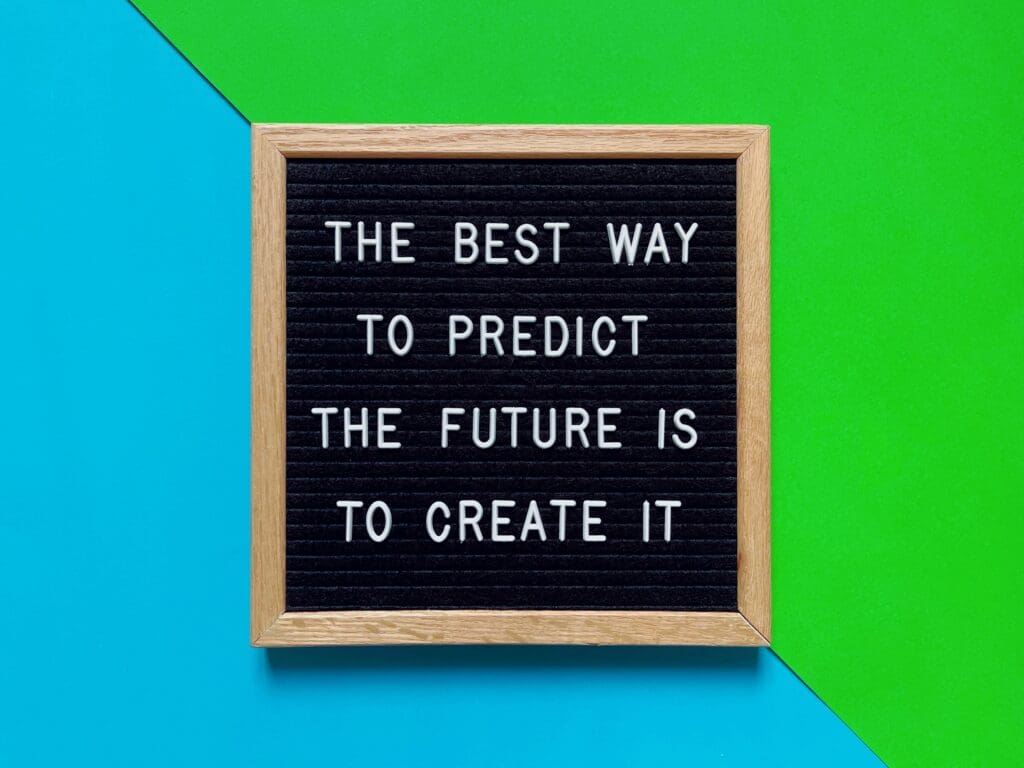
Coaching is expanding rapidly across sectors, geographies and delivery models. With that growth comes increased scrutiny, rising expectations and greater responsibility.
As organisations invest more heavily in coaching, questions of accreditation, supervision, ethics and measurable impact become central. Growth alone does not define a profession. Governance does.
The future of coaching will be shaped not only by innovation, but by clarity — clear standards, transparent pathways and shared ethical frameworks. Without structure, expansion risks fragmentation. With structure, growth strengthens credibility.
Digital transformation and AI integration further heighten the need for robust professional oversight. Confidentiality, data governance and informed consent are no longer peripheral considerations; they are foundational.
The profession now stands at a maturity threshold. Coaching must move from informal credibility to institutional legitimacy.
UCA contributes to this evolution by integrating accreditation pathways, supervision standards and evidence-informed frameworks designed to safeguard long-term sector integrity.
Curated Professional Perspective
Selected by UCA to broaden sector awareness
Global Standards | Professional Code
UCA Code of Professional Conduct and Ethics
Provides UCA’s ethical framework and professional standards for coaching practice.
Industry Research | Coaching Evidence
ICF Research Portal – International Coaching Federation
A collection of industry research, benchmarking and insights into coaching trends.
Academic Reference | Coaching Research
Applied Coaching Research Journal – UK Coaching
Free open-access research connecting evidence to coaching practice and professional development.
Professional Reflection
Integrate this insight into your educational context.
How clearly can you articulate your professional standards and accreditation pathway to clients?
What governance structures support your ethical decision-making?
How does supervision feature within your long-term professional plan?
Are your data, AI and confidentiality practices aligned with emerging expectations?
In what ways are you contributing to the professional maturity of the coaching sector?